Why So Many People Feel Directionless
Feeling lost or directionless is one of the most common human experiences — and one of the least talked about. We're surrounded by people who seem to have it figured out, which makes our own uncertainty feel like a personal failure.
But the truth is: direction isn't something you find once and keep forever. It's something you actively maintain through daily practice, weekly reflection, and honest self-awareness.
"The compass doesn't tell you where to go. It tells you where you are. Direction comes from knowing both where you are and where you want to be."
The Difference Between Goals and Direction
Many people confuse having goals with having direction. You can have a list of goals and still feel completely lost. Goals are destinations. Direction is the orientation that guides your daily choices.
Direction answers the question: "Am I moving toward what matters most to me?" Goals answer the question: "What do I want to achieve?" Both matter, but direction comes first.
How to Find Your Direction: A Practical Framework
Finding your direction isn't a one-time event. It's a practice. Here's a framework that works:
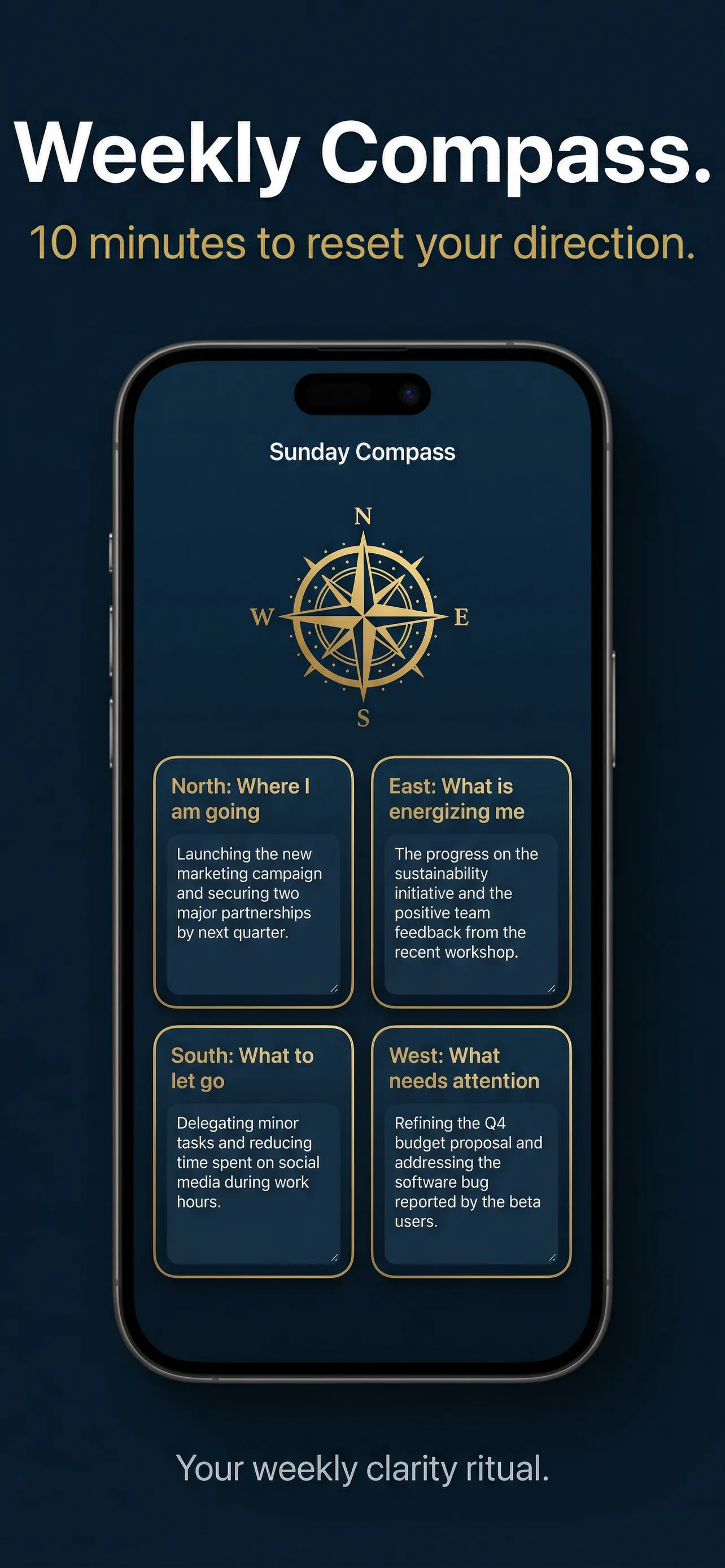
- Weekly reflection — Every Sunday, spend 10 minutes reviewing your week across key life domains. What felt aligned? What felt off?
- Daily Big Thing — Every morning, identify the single most important thing you could do today. This is your direction made concrete.
- Track your wins — Direction without progress feels empty. Log your wins daily to see the evidence of your movement.
- Revisit your North Statement — Monthly, revisit what matters most to you. Allow it to evolve as you grow.
The Role of Daily Planning in Finding Direction
One of the most powerful ways to find and maintain your direction is through intentional daily planning. When you start each day by identifying your most important work, you're actively choosing your direction rather than reacting to whatever comes at you.
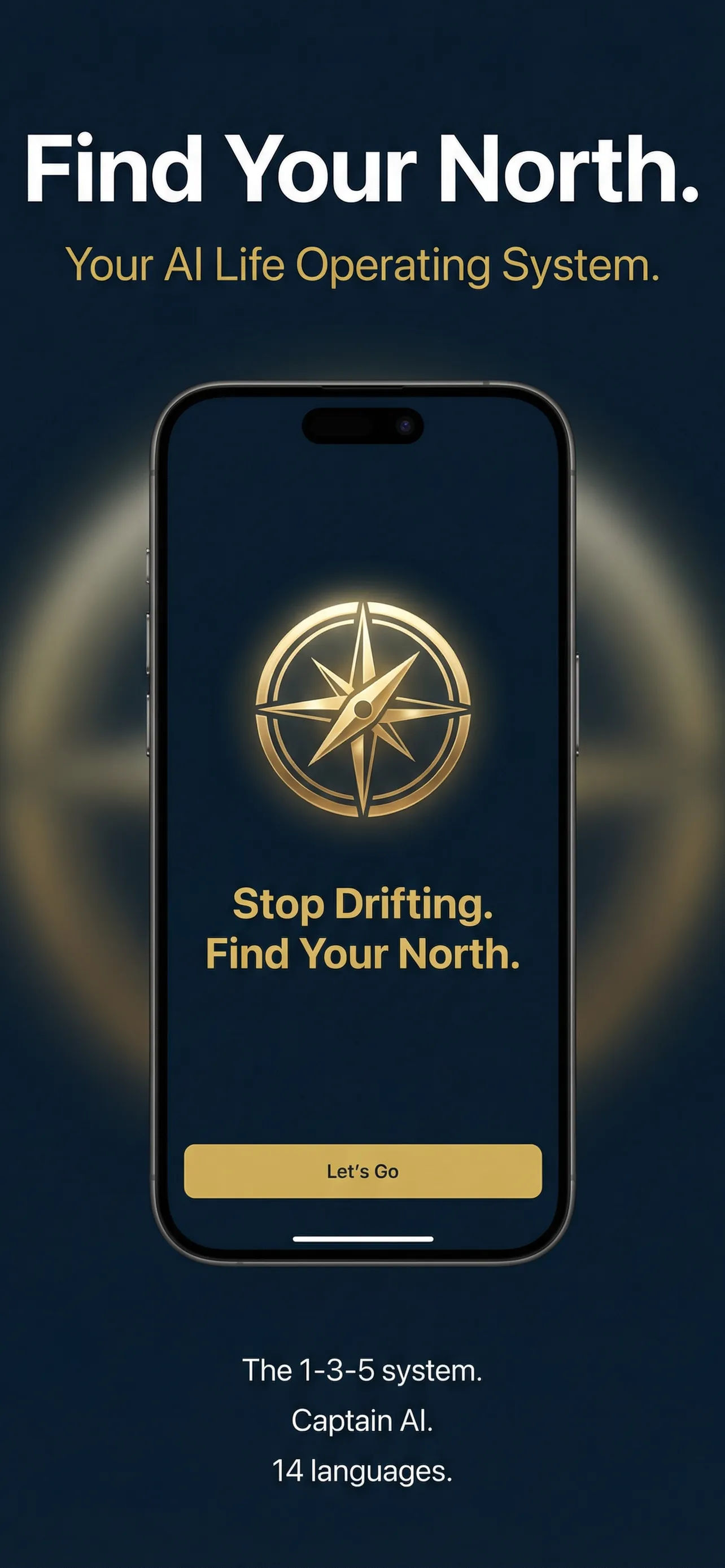
NORTH's 1-3-5 system makes this automatic. Every morning, you identify your Big Thing — the single most important thing you could do today that aligns with your larger direction. Over time, this daily practice of intentional focus creates the momentum that carries you toward your goals.
When Direction Changes
It's important to recognize that your direction will change over time — and that's not failure. It's growth. The person you are at 25 has different priorities than the person you are at 35 or 45.
NORTH is designed to accommodate this. Your North Statement, your goals, and your focus areas can all be updated as you evolve. The system adapts to you, not the other way around.
Start Finding Your North Today
NORTH helps you define your direction, plan your days with purpose, and build the momentum that carries you forward. 7-day free trial, no credit card required.
Frequently Asked Questions
How do I find my direction in life?
Finding your direction starts with honest reflection about what matters most to you — not what others expect. A weekly review practice, daily intentional planning, and tracking your progress are the three simple tools for building and maintaining direction.
What does "finding your North" mean?
Finding your North means identifying the direction that's most true to you — your most important goal, your deepest values, and the life you want to build. Like a compass pointing North, it's a fixed orientation that guides your daily decisions.
How does NORTH help with life direction?
NORTH helps you define your North Statement (your most important goal), plan your days with the 1-3-5 system, reflect weekly with the Compass, and track your progress with wins and momentum tracking. Together, these tools create a complete daily practice for finding and maintaining your direction.